Lisbon is one of the most extraordinary cities in Europe. Here is everything you need to know to actually experience it properly.
Lisbon is the kind of city that people visit and then spend the next several years trying to get back to. It is not immediately obvious why. The city is hilly and sometimes difficult to navigate and the tourist infrastructure has grown significantly in the last decade in ways that have changed parts of it. But the underlying thing, the light, the music, the food, the particular melancholy and warmth of the place, remains intact. Lisbon rewards people who go looking for it.
This guide is the version that helps you find it.
Understanding the Neighborhoods
Alfama
The oldest neighborhood in Lisbon and the one most visitors come for first. The narrow streets predate the 1755 earthquake that destroyed most of the rest of the city. The Sao Jorge Castle is here. The fado houses are here. The Miradouro da Graca viewpoint is here. It is also the most touristy part of the city and requires some navigation to find the parts of it that feel real rather than performed. Go on a Tuesday morning and walk without a map.
Bairro Alto
The neighborhood comes alive at night. During the day it is quiet and slightly rough around the edges. At night it is one of the best bar neighborhoods in Europe, small bars spilling onto the streets, groups of locals and travelers mixing in a way that feels genuinely integrated rather than staged. The wine is cheap and good. The nights go long.
LX Factory
A converted industrial complex in Alcantara that now houses restaurants, shops, a bookstore, and a market on Sunday mornings. It is slightly away from the center and worth the tram ride. The Sunday market is excellent. The bookstore, Ler Devagar, with its stacked shelves and flying bicycle installation, is one of the more extraordinary bookstores in Europe.
Principe Real
The neighborhood where Lisbon residents who have money and taste actually live and eat. Less photographed than Alfama, more interesting than Belem. Excellent restaurants, good independent shops, and a Saturday market in the garden that is worth building your morning around.
Mouraria
The neighborhood adjacent to Alfama that has historically been Lisbon's most multicultural quarter and remains so. The food reflects this in the best possible way. Less visited than Alfama and more interesting for it. The Intendente square on a weekend evening is the city at its most genuinely alive.
What to Eat
Portuguese food operates on a principle of quality raw ingredients prepared simply, and Lisbon is where that principle is applied at its highest level. The seafood is extraordinary because Portugal has one of the longest coastlines in Europe and a centuries old fishing culture. The wine is excellent and cheap because Portugal has been producing wine since before most other wine cultures existed.
Bacalhau: Salt cod, prepared in hundreds of ways, is the national dish. The version at a traditional tasca, slow cooked with potatoes, olive oil, and garlic, is the one to find. Order it at lunch, not dinner, at a place with handwritten menus and no English out front.
Pastel de Nata: The custard tart that has become synonymous with Lisbon. The original comes from Belem, from the Pasteis de Belem bakery that has been making them since 1837. The queue is real and worth it. Eat them hot, with cinnamon.
Natural wine: Lisbon has developed one of the best natural wine bar scenes in Europe in the last five years. Garrafeira Alfaia in Principe Real and By the Wine near the waterfront are both worth an afternoon.
Fado
Fado is the music of Lisbon and it is worth engaging with seriously rather than as a tourist check box. The challenge is that the tourist version, the large fado restaurants near the main squares, is a performance rather than an experience. The real version is in smaller houses in Alfama where the music happens because it happens, not because it has been scheduled for foreign visitors.
Mesa de Frades in Alfama is the best of the places that bridges this gap: small, intimate, genuinely good musicians, and a version of the tourist fado experience that is close enough to the real thing to be worth it. Book well in advance.
Getting Around
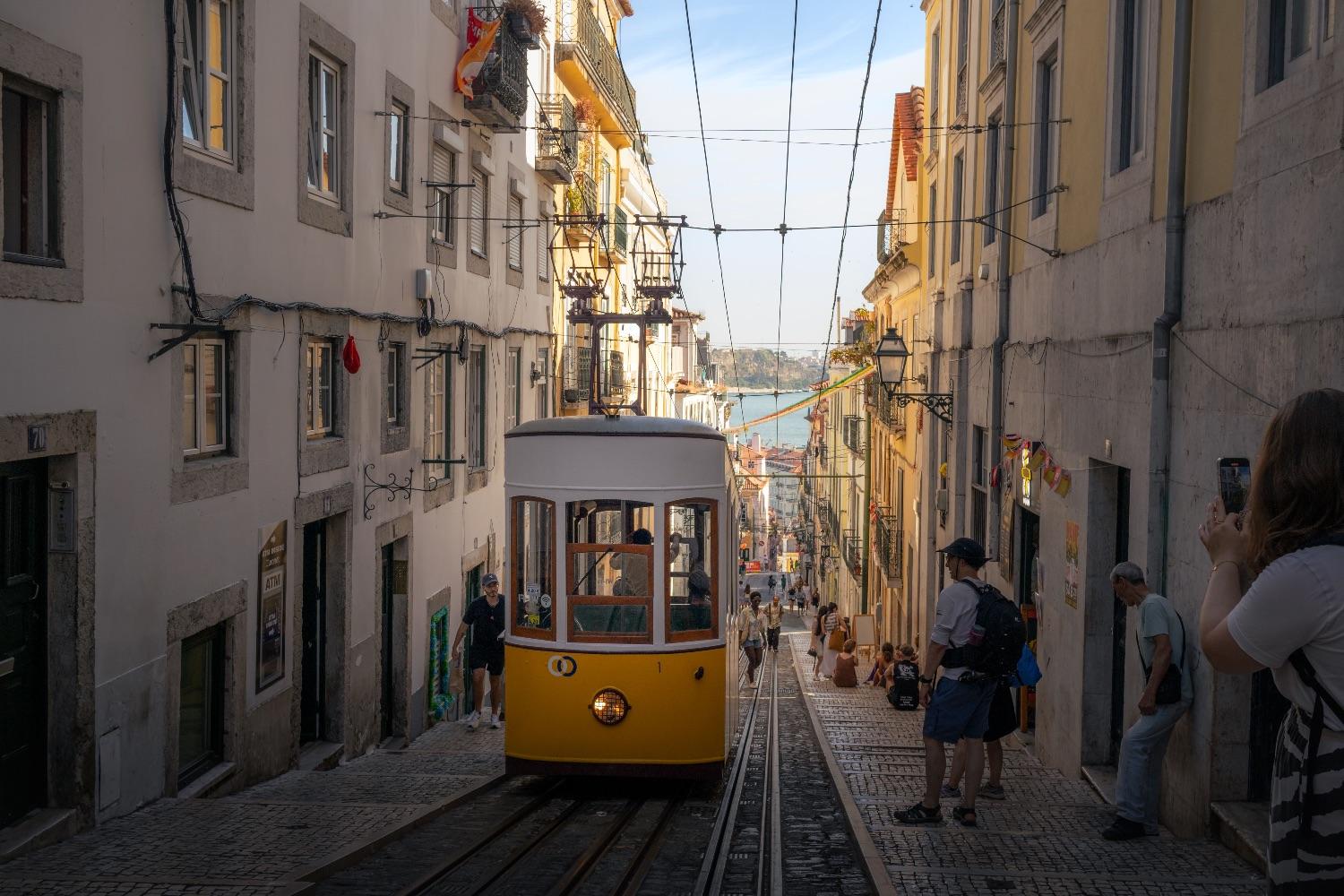
Lisbon is a city of hills and the trams and funiculars exist because the hills are genuinely steep. The Tram 28 is famous and extremely crowded. Tram 25 covers similar territory with a fraction of the tourists. The Elevador da Bica and Elevador da Gloria are funiculars that go up two of the steepest streets in the city and are worth taking once for the experience and then walking instead because they are perpetually full.
The metro is excellent for longer distances. Walking is the right answer for almost everything in the center, steep streets included. Lisbon is not a large city and the best things happen at street level.
Day Trips Worth Taking
Sintra: 40 minutes by train from Rossio station and one of the more extraordinary day trips in Europe. The palaces are genuinely bizarre and magnificent. The Pena Palace on the hilltop looks like it was designed by someone who had never seen a building before and had extremely strong opinions about color. Go on a weekday. The weekend crowds are significant.
Setubal and the Arrabida Coast: 45 minutes south of Lisbon and a completely different landscape. Limestone cliffs, clear water, and beaches that look more like the Mediterranean than the Atlantic. Rent a car or join a small group tour. The drive along the Arrabida ridge is one of the better drives in Portugal.
How Long to Stay
Four nights is the minimum to do Lisbon properly. Five or six nights lets you add a day trip to Sintra and a day without an agenda, which is when Lisbon usually reveals its best version of itself. Less than four nights and you will leave feeling like you saw the surface of it rather than the thing itself.
Planary tip: Lisbon rewards thoughtful planning. A little research helps you discover experiences beyond the most obvious tourist stops. Tell us what you are looking for and we will build around it.